We at UDisc – disc golf's most popular app for keeping score, finding courses, and more – are also avid players. Here we give you the advice we wish we'd had from the start about the best disc golf discs for beginners.
Click or tap any topic in the navigation to jump to a section that'll help you learn all about it.
There are four basic categories of discs. Here they are in order of how much we'd recommend them for a first disc:
Midrange Midranges are extremely versatile discs that can be used for short approaches and powerful drives. They're also just fine for putting (short range shots where you have a high chance of getting in the basket). Broad and glide-y, they can feel a lot like Frisbees in the hand but are built for disc golf.
Putter While putters are generally used for short "putts," they're also frequently thrown long distances, too. If you find a putter that feels great to you, there's no reason you shouldn't use it as your sole disc when starting out. Just know that a midrange might give you a bit more distance and putters tend to have deeper rims that feel awkward to some players when they're trying to grip them for powerful throws.
Fairway driver If you want to start playing with just one disc, we don't recommend using a fairway driver. These are designed to fly farther than midranges – but generally only for players with some experience using disc golf throwing techniques. For those who haven't played much – or any – disc golf, most fairway drivers will curve sharply to the left or right (depending on what hand you throw with) shortly after they're released without going very far.
Distance driver Everything we said about fairway drivers being bad for beginners is true here, too – only taken up a notch or two. Don't be fooled by the word "distance" in the name. Most beginners will be able to throw most midranges much farther and more accurately than any distance driver.
These are our suggestions, in no particular order, for some of the best disc golf discs for beginners:
MVP Detour - Neutron plastic
Kastaplast Svea - K1 or K1 soft plastic
Latitude 64° Fuse - Opto or Gold plastic
Discraft Comet - Z-line or ESP plastic
Innova Mako3 - Champion or Star plastic
Dynamic Discs Bounty - Lucid plastic
Trash Panda Dune – Premium plastic (🌳 eco-conscious choice made of 100% recycled plastic)
In that list, the last word before the dash is always the name of a specific disc and everything before is the brand that makes the disc, e.g., the Fuse is a disc made by the Latitude 64° brand.
We recommended specific plastics, too, because navigating disc brands' plastic types can be overwhelming at first. All of the plastics mentioned above are premium plastic types that won't bend out of shape the first time you smack into a tree (and, trust us, every disc golfer has smacked lots of discs into lots of trees). You may see these discs in other sorts of plastics for less money, but that plastic is less expensive for good reasons.
When we recommend two plastics, the first one listed is stiffer/less gummy and the second one is a bit more flexible/gummier. There won't be a huge difference between the discs other than how they feel in your hand, so we'll leave it to you to decide which sounds nicer to hold.
No matter what, if you want to give disc golf a try with just one disc, any of the discs in the list in one of the plastics suggested is a great option.
What makes those discs good choices for beginners?
The brands (aside from eco-friendly Trash Panda, which is also great but lesser-known) all showed up in our post "The Best Disc Golf Disc Brands According To Everyday Players." That post is based on input from thousands of disc golfers with the UDisc app about which disc golf disc brands they like and trust most in various categories.
The discs all fall under the category "midrange." See an earlier section for why midranges are our top recommendation for beginner disc golf discs.
When you're just out for fun, you can definitely play disc golf with an everyday Frisbee if you'd like. Just avoid any super lightweight Frisbees because they'll likely flip over and roll if you put any kind of power behind your throw.
If you start playing disc golf fairly regularly, though, you'll want to invest in a disc golf disc. Disc golf baskets catch them better than Frisbees, and they're usually more capable of certain flight patterns you'll need as you get better at disc golf.
Are you looking for discs on Amazon or in a big box store and want to know if something you're interested in is from a reputable brand? If you see the brand in the alphabetically organized list below, you're good to go:
Above Ground Level (AGL)
Alfa
Axiom
Clash
DGA
Discmania
Discraft
Dynamic Discs
Guru
Kastaplast
Innova
Latitude 64°
MVP
Prodigy
Prodiscus
RPM
Streamline
Thought Space Athletics
Trash Panda
Westside Discs
Viking
Yikun
Note that if you're on a disc golf-focused retail site or in a disc golf-focused store, you may see discs from trustworthy brands that don't appear above. The list above includes brands you'd be likely to find on large online retail marketplaces or in department stores in North America and Europe.
Are Disc Golf Starter Packs a Good Idea for Beginners?
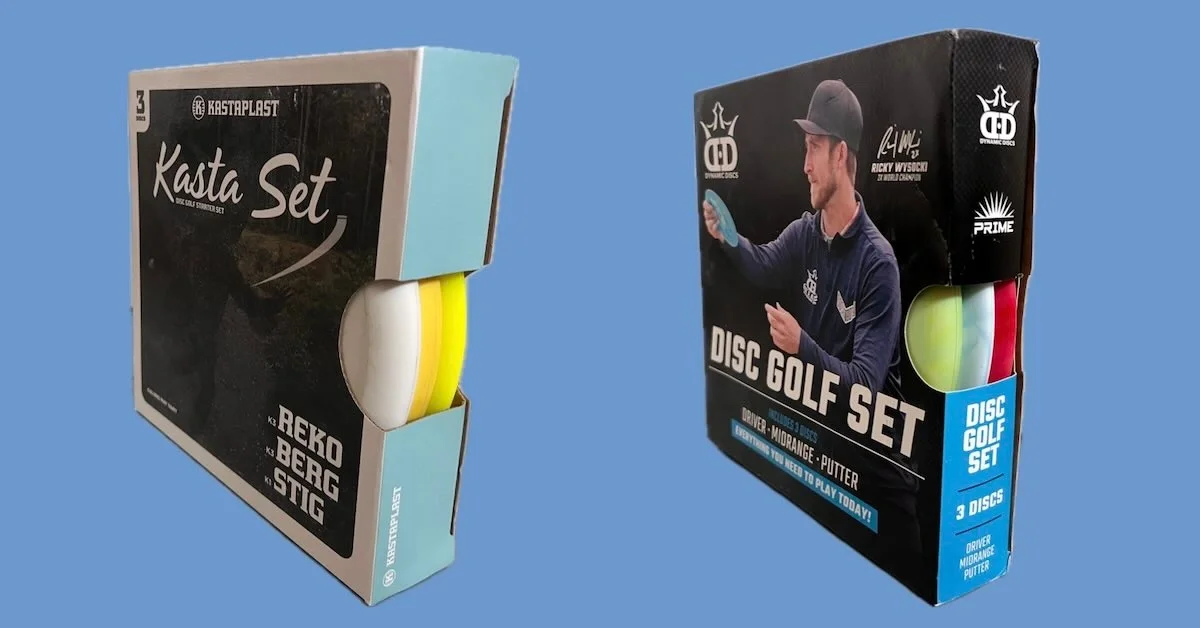
Disc golf starter packs (typically with three different discs) are a great option for beginners – especially if you don't have a dedicated disc golf shop nearby to help you choose beginner-friendly discs individually.
Disc golf starter sets usually have three discs, a putter, midrange, and fairway driver.
Be sure to get a starter pack from a trusted, disc-golf focused brand, though. A number of starter packs from non-disc golf companies have discs that use very low-quality plastic for disc golf and often don't fly particularly well.
What's the Best Way to Buy Disc Golf Discs for Beginners?
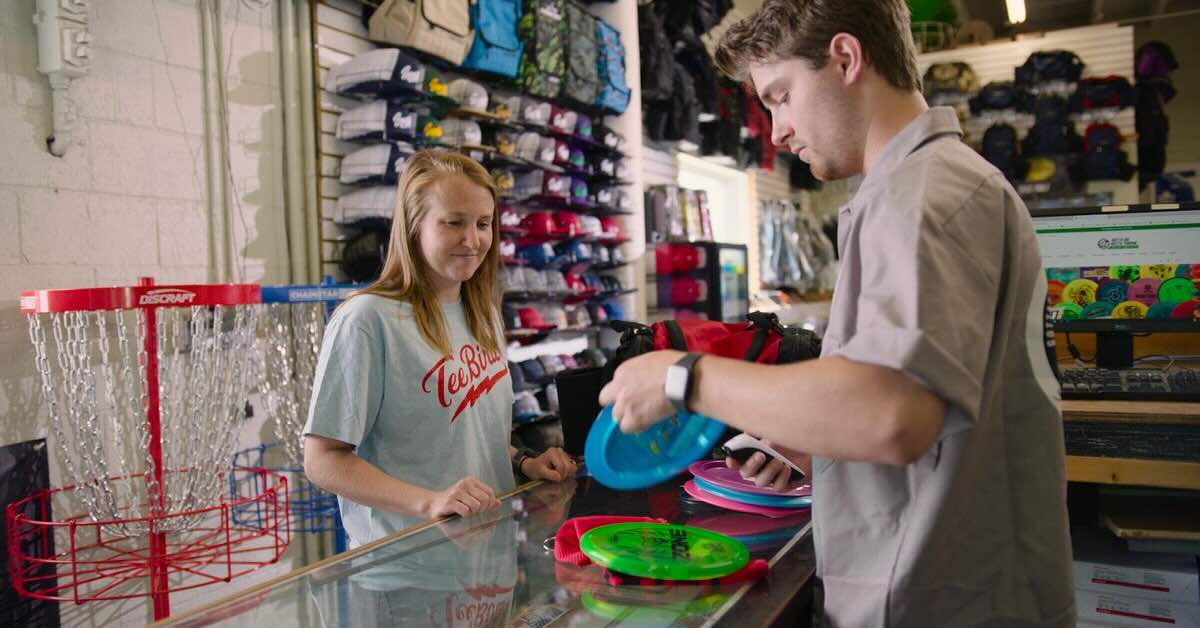
The best optionfor picking up beginner-friendly disc golf discs is to go to a store dedicated to selling disc golf equipment. Disc golf stores almost always employ people who play the game themselves, and giving beginners good advice is one of the top ways for them to grow their customer base.
You may also be able to find an independent outdoor sports store that carries discs and has some staff who can provide advice about it.
Stores like these give you a chance to get in-person advice from someone who knows the game and hold a disc before you buy it. There are many variations in disc golf disc rims and plastics that some people like and some people don't, so having a disc in your hand before laying out cash for it can be a real advantage.
Check UDisc Stores to see if there's a disc golf shop near you. Keep in mind that some listings in UDisc Stores are places that simply have discs rather than focus on disc golf. We suggest reviewing any entry in the directory a bit before heading out to it.
You'll probably have to make a decision about what weight you'd like the disc in. Most of the discs we suggested will have weights between 170 grams (or maybe a few grams lighter) and 180 grams:
The lighter the disc, the less power it will take to throw well.
For kids under 12 or so, the lighter a disc is, the better it usually flies.
For adults, lighter discs are often better for those with less athletic experience and heavier discs are better for those with more.
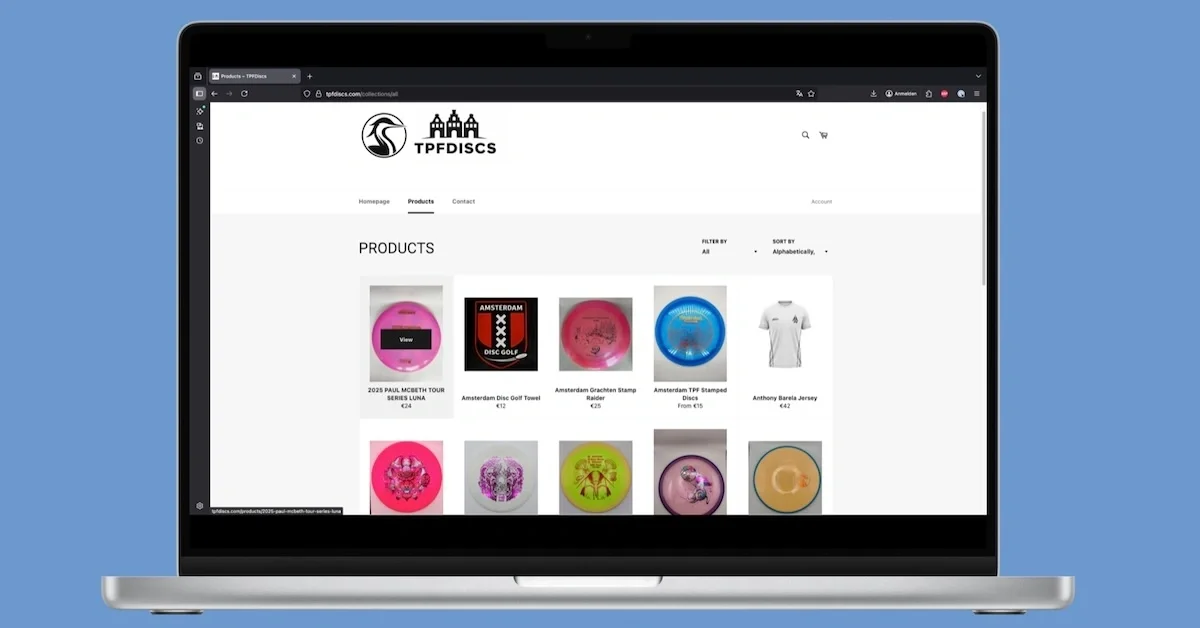
Screenshot from the site of TPF Discs, a disc golf retailer based near Amsterdam in the Netherlands.
Interested in discount disc golf discs? There's a huge supply of used disc golf discs out there, and many of them sell for less than their new counterparts but fly just as well. Check out our post "Used Disc Golf Discs: Where To Buy, Sell, & Trade Them Online" for sites selling used disc golf discs.
That same post is also a useful resource for finding disc golf retail sites generally (though it does leave out big and trustworthy players in that field like Infinite Discs, OTB Discs, and Powergrip that don't have used inventories). The benefit of dedicated disc golf retail sites is that they almost always carry trusted disc golf brands exclusively, which eliminates worry that you'll choose a less-than-reputable product (which low prices on sites like Amazon can lure you into).
Tips for Buying Disc Golf Discs for Beginners at Stores Not Dedicated to Disc Golf
If you'd like to pick up discs in-person but don't have a dedicated disc golf shop nearby, you can try out a large sporting goods store (e.g., Dick's Sporting Goods, REI) or any store with a large sporting goods department (e.g., Walmart). Once there, you can always ask if anyone on staff plays disc golf and could help you pick out good beginner discs, but success with that is likely to be very hit and miss.
Another option is to see if you have a Play It Again Sports in town. If so, give them a call to see if they carry disc golf discs.
How Do I Know If a Disc Golf Disc Is Good or Bad for Beginners?
A great beginner disc golf disc should be able to fly fairly far and straight without a thrower needing much or any understanding of disc golf throwing techniques. It should also be made out of plastic that isn't likely to bend out of shape or get huge gashes when it collides with typical obstacles on a disc golf course (e.g., trees and bushes).
If you can't get your hands on a disc recommended in our 'What Are the Best Disc Golf Discs for Beginners?' section (or want to buy a disc immediately at a store that doesn't specialize in disc golf), here's a checklist to judge whether you're getting a good disc golf disc for beginners:
Check the brand See if you're looking at a disc from a trustworthy brand by checking if the disc's maker is on our list of trusted disc golf brands from earlier in this post.
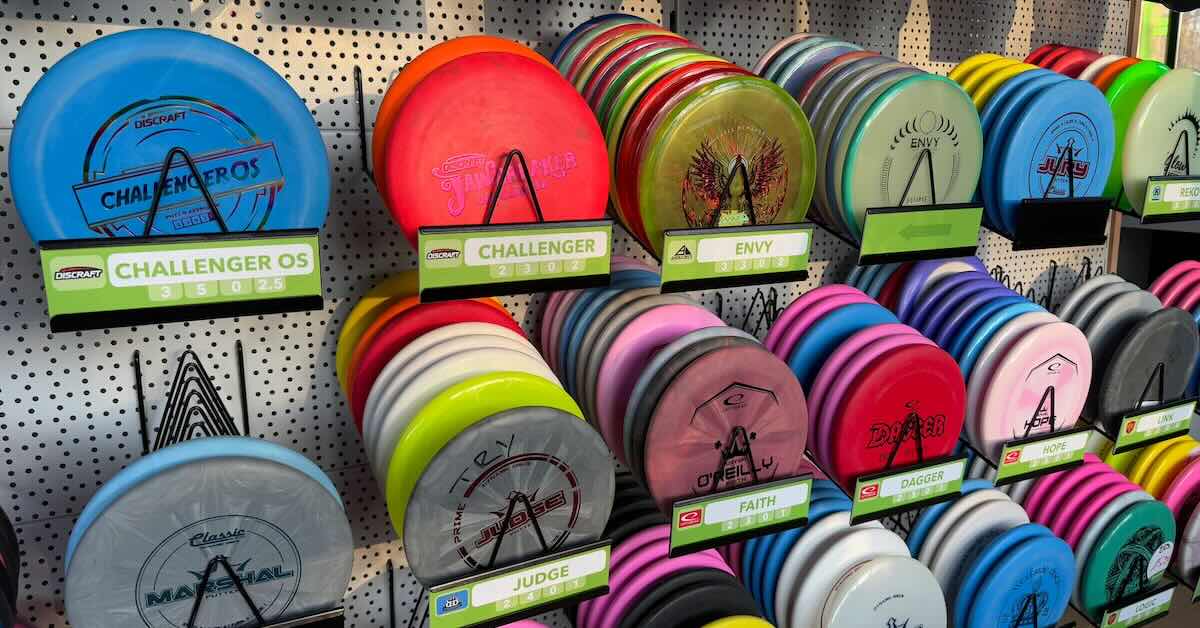
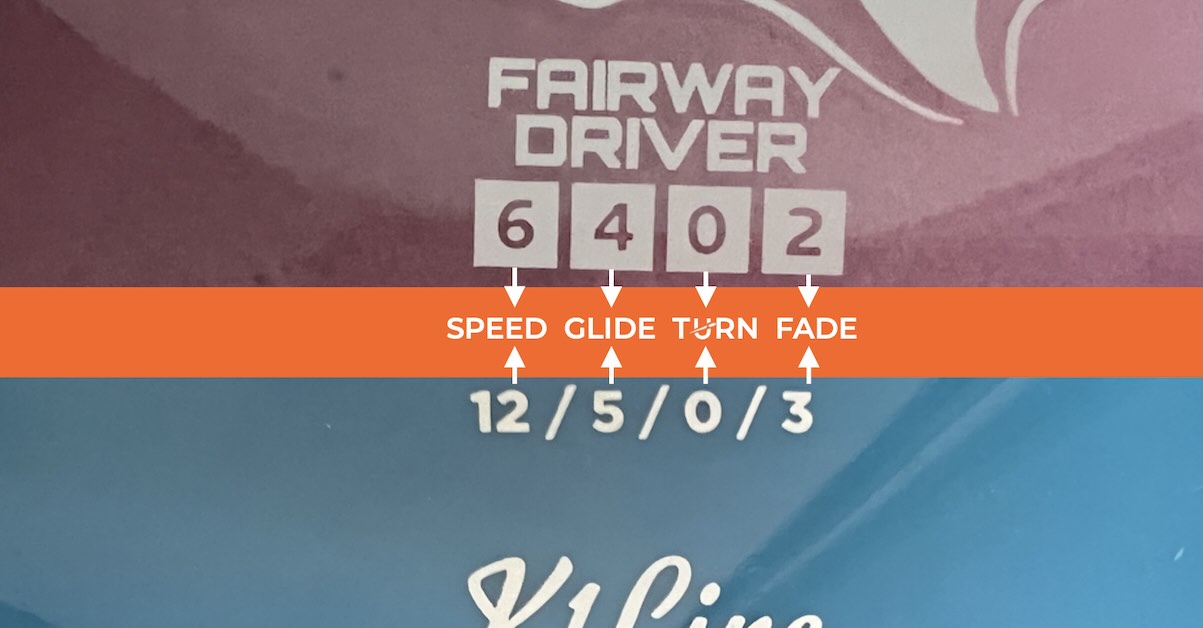
Check the flight numbers Flight numbers are a set of four numbers that indicate Speed, Glide, Turn, and Fade.They are usually in that exact order from left to right. No popular brand that prints flight numbers on their discs breaks the pattern of speed, glide, turn, and fade for the first four numbers that appear. The top disc is a fairway driver from Discmania and the bottom is a distance driver from Kastaplast.
Some discs have these numbers in a 2x2 square, with Speed top left, Glide top right, Turn bottom left, and Fade bottom right.
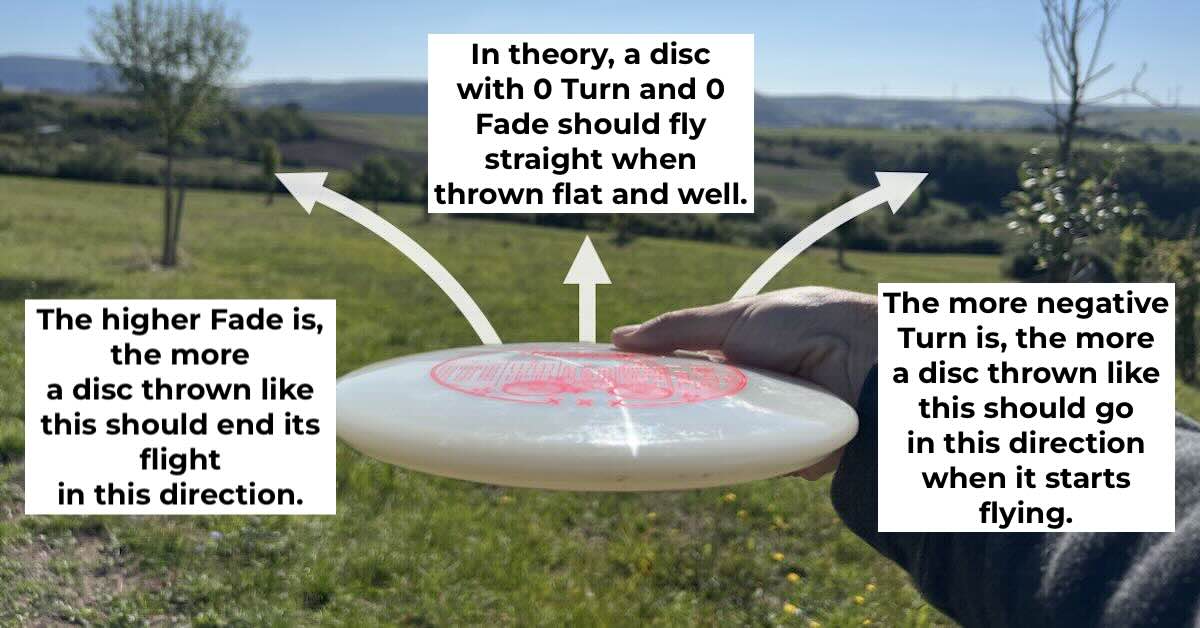
-Speed (1-6 recommended beginner range):How fast you need to throw a disc for it to achieve its intended flight pattern. The higher this number is, the faster you need to throw the disc to get it to fly well. -Glide (the higher, the better for beginners):The higher the number, the longer a disc should potentially stay in the air. -Turn(0 to -3 recommended beginner range): The more negative the number, the more likely a disc should be to turn right near the beginning of its flight after a righthand backhand throw when thrown flat (see photo below). -Fade: (0-1 recommended beginner range): The higher the number, the more a disc should move left near the end of its flight after a righthand backhand throw (see photo below). Discs with Fade higher than 1 are not likely to fly very far forward for most beginners before fading.
Check the weight For adults, discs from 165-180 grams that fall in the recommended flight number ranges above are likely to make great first disc golf discs (weights are often written on discs). Players with less athletic experience or who don't expect to throw with lots of power should stick to the lower end of that range. Go heavier if you have plenty of athletic experience.
When picking up discs for young kids (under 12 or those who have little athletic experience), discs that are even lighter than 165 grams could also work well.
If you have no way to know how heavy a disc is, just make sure it doesn't feel like you'd be tossing a paper plate around. Discs need a little heft to fly predictably.
Enjoy Your First Round of Disc Golf with a Great Beginner Disc Golf Disc!
We hope we got to all your most pressing questions in this post and helped you zero in on a great first disc golf disc. If you're interested in learning about the basic rules of disc golf or how to find disc golf courses, check out our post "How To Play Disc Golf For Beginners."
To connect to the wider world of disc golf, subscribe to our Release Point newsletter. It includes stats on how much disc golf is being played around the world, updates about our newest posts here on the blog, and the most interesting disc golf stories out there.