This story originally appeared in UDisc's 2024 Disc Golf Growth Report
When youth soccer coach Luisa Bartolome was introduced to disc golf in 2019 in Malaysia, she was, like many others, instantly hooked. In addition to her own joy, she immediately saw the impact it could have on the kids that she coached, and when the pandemic put a pause on soccer in the beginning of 2020 she pivoted to bringing her pupils to the course.
"I didn't expect that they would love it, but they did," Bartolome recalled. "I decided I was going to do disc golf coaching for kids for free." She also helped craft kid-friendly places to play, which she dubbed "little disc golfer" courses, to help make the game more accessible.
But when further pandemic restrictions forced her to return home to her native Philippines later in 2020, she returned to find a lack of the same support and infrastructure for disc golf that she enjoyed in Malaysia.
"It was heartbreaking," Bartolome said. "I had been there for 10 years. And then friends said, 'Oh, Luisa, I think that you need to start disc golf in the Philippines." And so she set out to do just that.
- Bartolome said disc golf existed in the country's capital, Manila, back in 2012 in the form of an object course, and that in 2014 there was some interest from churches and universities. But on the whole, there was very little organization of the sport.
- "The American player that introduced them to that went home," she said.
Just like she had in Malaysia, Bartolome started by trying to bring disc golf to young people in several communities.
-
Step 1: Help redesign the Road to Damascus, the country's first permanent course that was installed in 2021 as part of the PDGA's Marco Polo grant program but, according to Bartolome, was too difficult to appeal to a community that was new to the sport. "I rearranged the course to be a simpler, intermediate and recreational player course," Bartolome said. "And we did lots of clinics there, and I think 500 people have been taught in that community."
-
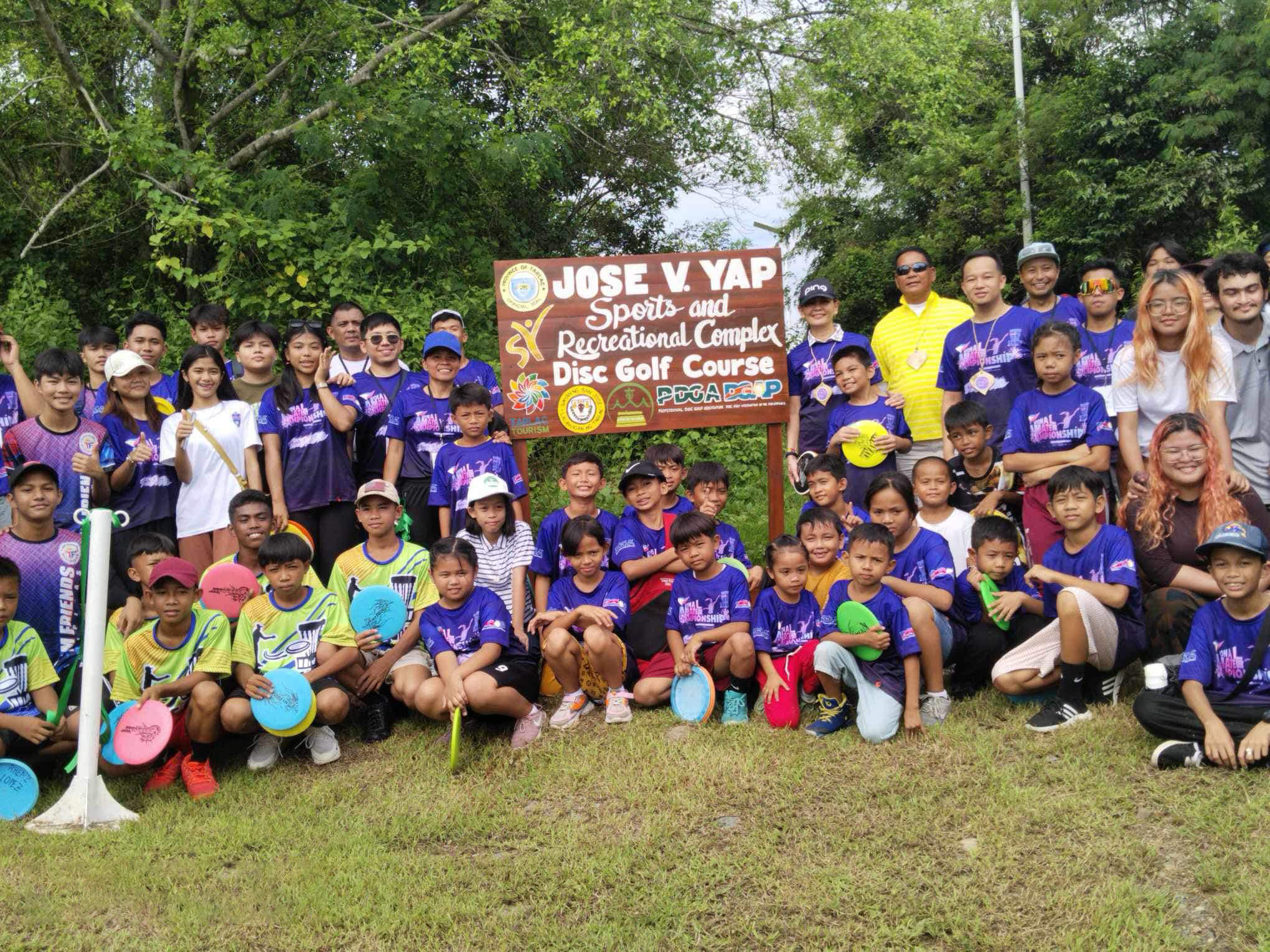
Step 2: Work with local governments to get more courses in the ground. She's done that in her home province of Tarlac, where the JVY Recreational Park now plays home to another course thanks to not only the aforementioned Marco Polo program, but also the strong support of Governor Susan Yap.
Plus, there are now nine holes available for play just outside Manila, near a resort and casino that draws plenty of foot traffic (and even some globe-trotting professional disc golfers). That provides regular access to the sport for the city's nearly 2 million residents.
- The Philippines now have four fully-fledged courses, three of which were built in 2023, and Bartolome said several more were in the works. As a result, participation in the country has exploded, growing by more than 400%.
Being able to give kids an outlet for their health and wellness has been the key to success and has continued to spur government buy-in. Clinics and events are a consistent draw, and the sport has even made a couple appearances on national television.
"If you do something great for the community, especially for kids, that's the catch here in the Philippines," Bartolome said. "When you include people who can't normally do it, or can help them, you get support. That's happening, and it's growing – it's actually growing, and we're happy that we are now at the point where I can say, when someone says 'disc golf,' people say, 'Ah, we know that.'"
