
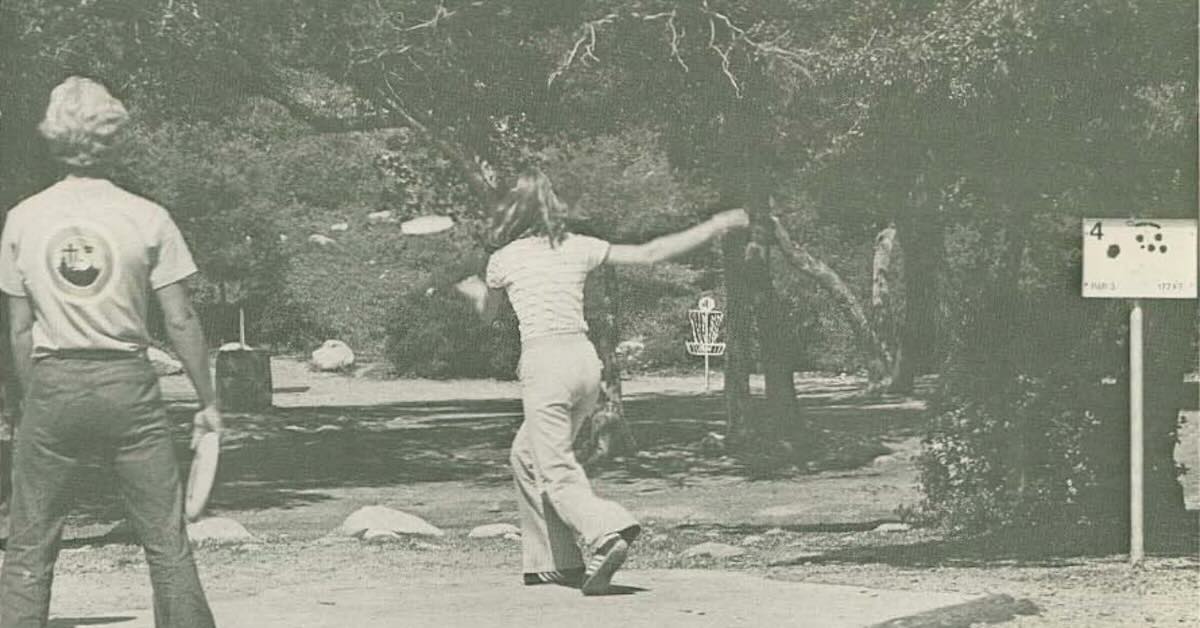
In late summer 1975, poles started popping up at Oak Grove Park (today Hahamongna Watershed Park) in California's Los Angeles County near the city of Pasadena. The chest-height poles and their seemingly random locations would have mystified almost anyone who came across them. And even if the average parkgoer did encounter someone who could tell them what they were for, they might have suspected the answer was a joke.
The poles were targets for Frisbee golf, a virtually unknown game that would be part of the second-ever World Frisbee Championships taking place in Pasadena that August. Most events would be down the road in the Rose Bowl (yes, that Rose Bowl), but Frisbee golf – later called "disc golf" once the sport became less entangled with toy company Wham-O that owns the U.S. trademark for "Frisbee" – required obstacles that an open field couldn't provide.
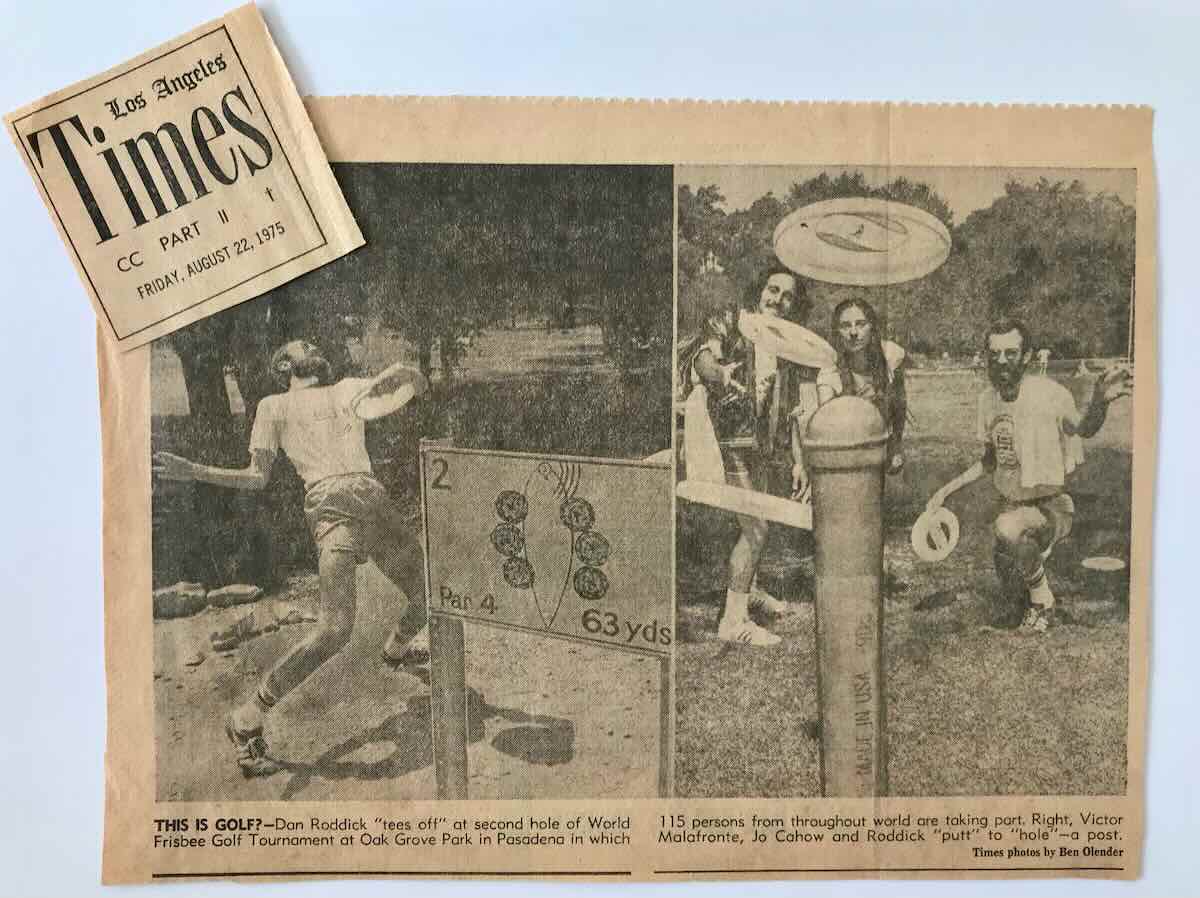
As strange as it was for people to bother installing equipment for a niche game within the already niche world of competitive disc sports, the future their work made possible was perhaps even more unexpected.
Today people play millions of disc golf rounds annually at over 16,000 disc golf courses found on all seven continents, and Oak Grove has the distinction of being the first permanent place to play disc golf ever built. In 2025, the world's first disc golf course turned 50.
We explored this seminal course's history and legacy with three people who know its origins and early days intimately and will also all be taking part in the upcoming Oak Grove Golden Jubilee on December 5-7, 2025 – a celebration of the course's big birthday filled with food, fun, games, and competitions.
When Your Dad Invents the Modern Frisbee
The designer and main force behind the creation of Oak Grove disc golf course was "Steady" Ed Headrick (1924-2002), who's known as both the father of the modern Frisbee and disc golf. A high school friend of the founders of Wham-O, Ed (who you can see in a video below showing off the Frisbee to talk show host Johnny Carson) joined the company in 1964 and eventually worked his way up to the role of vice president.
According to one of Ed's three sons, Gary Headrick, Ed's children became part of Wham-O research and development almost by default.
"We'd get all the really questionable toys, things that would explode or could possibly hurt someone or looked like boogers," recalled Gary. "It was things that were kind of like, 'Well, let's see if the kids react the way we think they will.'"
For some toys, though, the Headricks' yard just wasn't big enough. So they'd head to Oak Grove, which was just a short drive away from both the Headricks' home and Wham-O's headquarters.
"A lot of times we'd need a little space to try the Turbo-Tube or boomerangs or slingshots and all that stuff, and Oak Grove was the closest park," Gary said. "That was just kind of our experimental playground."
So when a toy came along that truly needed air space, Oak Grove was naturally the place it got tested the most.
"I'm pretty sure we were the first kids to play with the Frisbee made by Wham-O," Gary recalled. "Dad brought it home, and it was just this plain old red disc. Prior to that, the only thing we'd done was throw balls or hit golf balls, and the experience was so amazing from never having seen anything that flies, that will curve with the air. You can skip it off the ground. We just had so much fun the first time we saw one."
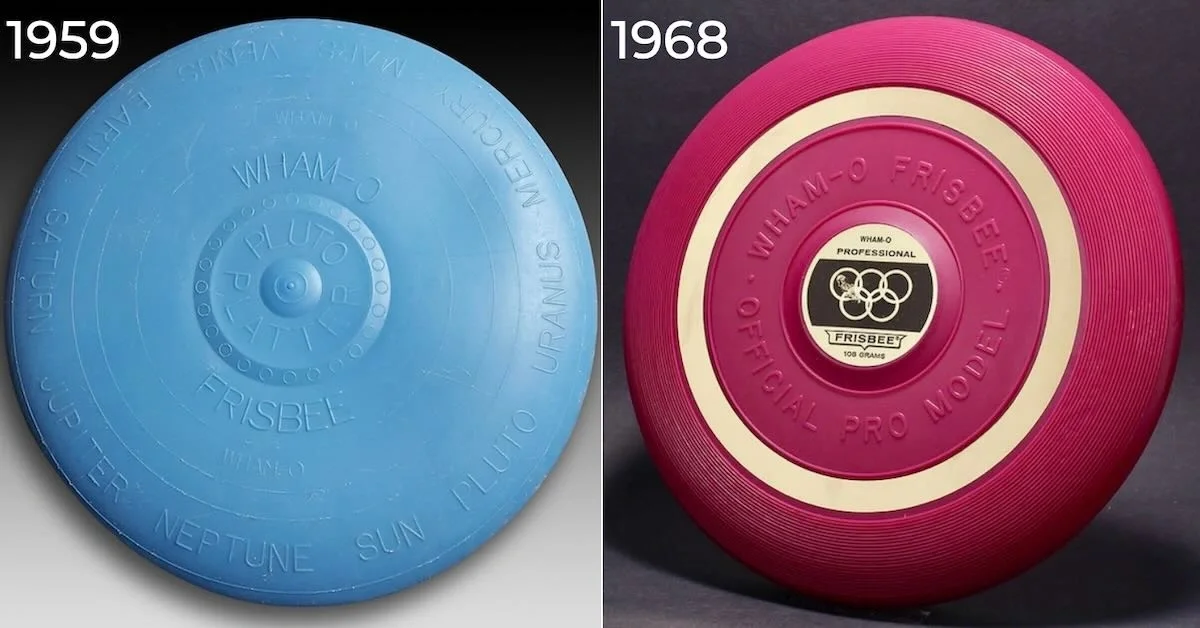
When Gary talked about "the Frisbee made by Wham-O," he likely meant "the Frisbee my dad created." While Wham-O had produced a Frisbee since the late 1950s, Ed majorly redesigned it shortly after joining the company. His heavier, better-flying, and more serious-looking version of the flying disc (along with later modified designs) set off a craze that resulted in tens of millions of units sold, a patent, and "Frisbee" becoming the internationally-recognized term it is today.
And while many hit toys are little more than fads, this flying disc stuck, hooking some people – including Ed himself – for life.
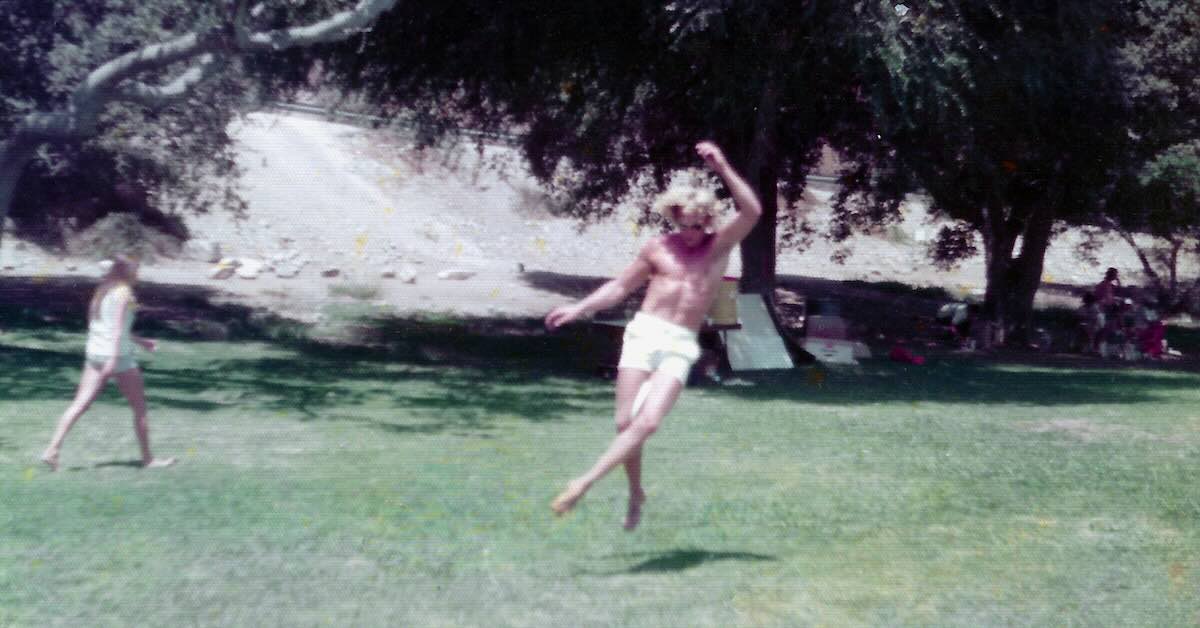
For Gary, the early years of Frisbee with their lack of set rules and conventions were the most alluring.
"I wasn't great at group sports, but I loved Frisbee," Gary said. "It was more like a challenge to do your personal best. It wasn't competing so much. You didn't have to memorize all the football plays. You didn't have to sit on the bench and wait your turn. It was a real welcoming environment."
Gary remembered skipping school with friends to go throw Frisbees at Oak Grove and organizing gatherings there on the fly where Frisbee games were a main attraction.
"We'd have events down there, and my dad would participate," Gary said. "It was all local, informal – 'Hey, let's get a band to come down here' or 'Let's try these rules.'"
Why the First Disc Golf Course Was Built at Oak Grove
Ed was well-aware that enthusiasm for the Frisbee like Gary and his friends' was shared by thousands upon thousands of others. He saw the power – and, for Wham-O, value – in the culture and community Frisbees could create, so he did his utmost to foster and harness it.
Those aims resulted in him founding the International Frisbee Association (IFA) in 1967 and growing its membership to over 50,000 by the 1970s. He also secured the famous Rose Bowl as the location for the first-ever World Frisbee Championships (WFC) – an event officially sanctioned by the IFA – in 1974 and its second iteration in 1975.
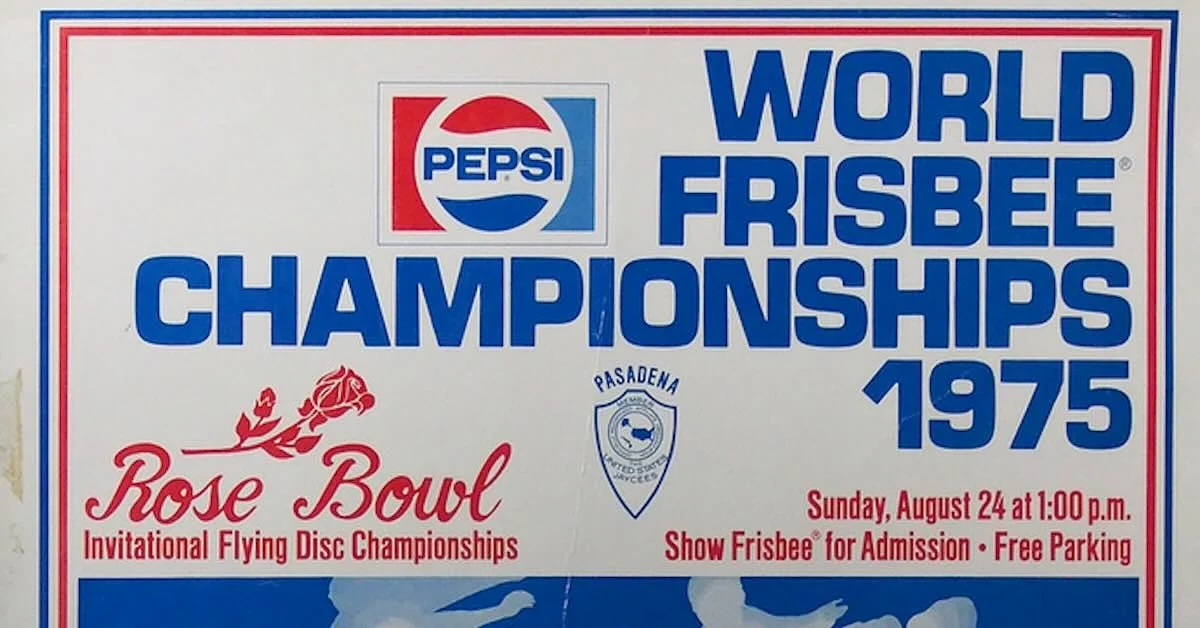
Dan "Stork" Roddick helped Ed organize the 1975 WFC. Now a living legend of disc sports and one of the era's leading competitors, Roddick had received a call from Ed out of the blue earlier that year asking if he'd move out to California and head the IFA. He decided he couldn't pass up the chance to make his passion his job and put a PhD program at Rutgers on hiatus to give it a shot. The decision put him in extremely close contact with Ed.
"There was no talk about this before, but my first day at work, he says, 'Okay, it's like quarter of five, let's go home,'" Roddick said. "I went, 'Okay.' I thought he was going to direct me to the nearest Motel 6 or something, and he gets me in his big floater Cadillac or whatever it was at the time and drives me up to his house and says, 'There's your room – dinner's at six.'"
After that, Roddick said he was treated just like a family member in Ed's home for a few weeks until he found his own place.
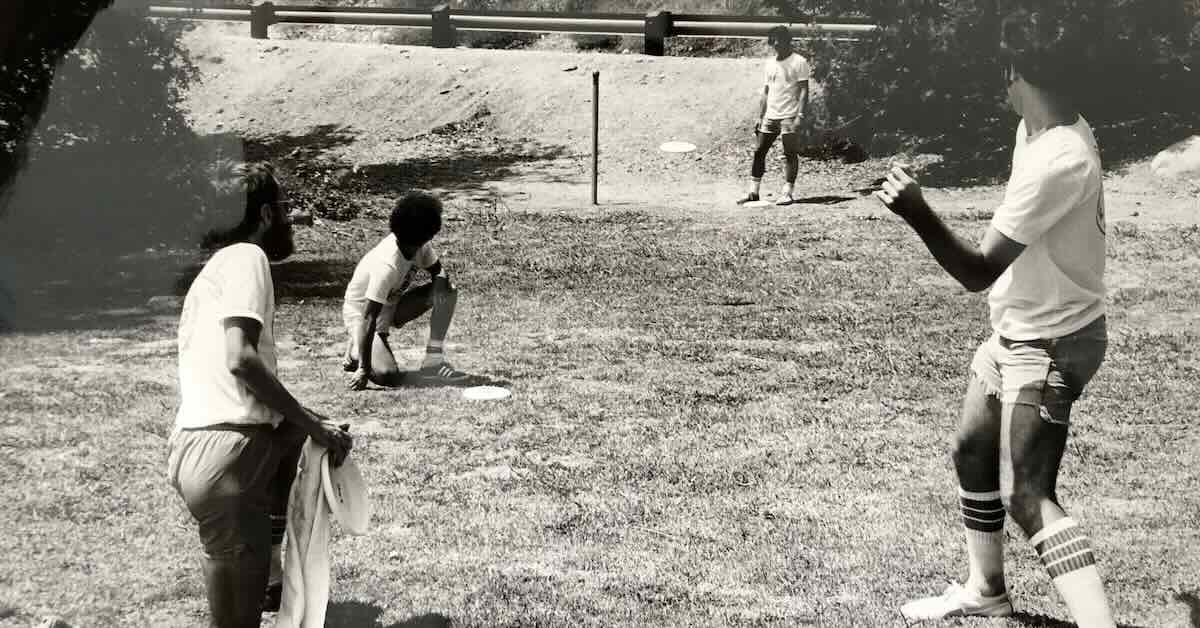
As Roddick, Ed, and other influential Frisbee enthusiasts developed the 1975 WFC's slate of competitions, they decided the increasingly popular golf – a game where competitors tried to reach a distant target with a disc from a set teeing area in as few throws as possible – should be added. For Roddick, the game's inclusion was a no-brainer. He'd driven to California from his previous East Coast home in a car he'd won at the American Flying Disc Open in Rochester, New York, the largest disc golf tournament held up to that point.
Since the Rose Bowl's open field couldn't be used to create an interesting golf course, Oak Grove (just five miles/eight kilometers from the Rose Bowl) was the obvious option. But whereas every prior disc golf course used for competition had been temporary, Ed had a different ambition for the setup at Oak Grove.
"Ed started to talk about, 'Well, let's see if we can convince L.A. County to let us put these poles in permanently,'" Roddick said.
The idea was that a permanent course could benefit from the hype around the WFC, and it would be there for interested people to try once the competition was over. But even after Ed got the approvals he needed, it wasn't clear that the course would be ready for the championships.
"I remember walking early fairways that were chest-high with weeds, and us saying, 'Well, is this actually gonna be functional?'" Roddick said.
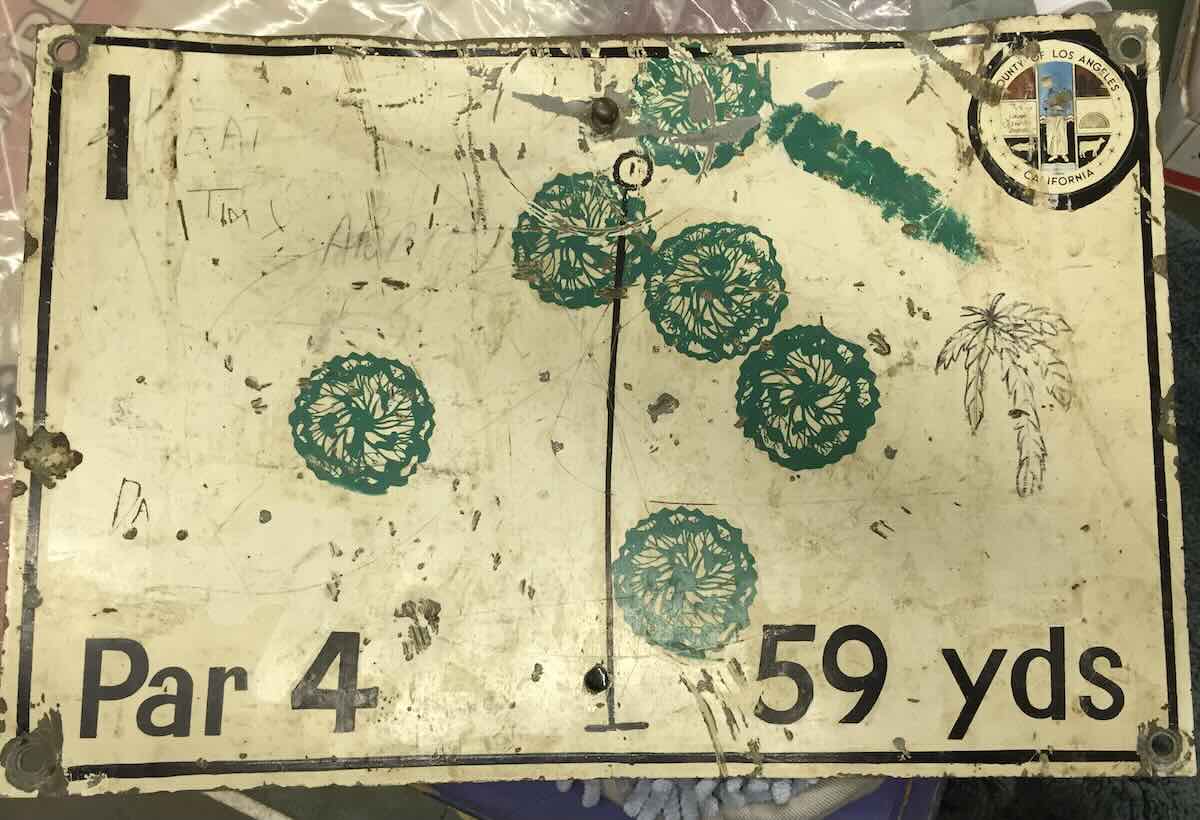
It was. Fairways were ready and target poles and tee signs were in the ground by the time the WFC came to town, and August 1975 marked the first time a disc golf competition was held on a permanent course.
Shortly thereafter, Ed and Roddick were stunned to discover that the facility was accomplishing exactly what they'd hoped.
"I can remember Ed and me coming back a couple of weeks later for whatever reason to look at the layout and there were people who we didn't know playing," Roddick said. "This was just not something that ever happened. We knew everybody who played disc golf on the planet – we knew 'em all! They'd been at all the tournaments. Everybody knew each other. So we say, 'What are you guys doing?' and they say, 'Well, we were here, we saw you guys playing in the championship. It looked like fun and so we've been coming back ever since.'"
Oak Grove Ushers in Huge Changes for Disc Golf
Not long after Roddick and Ed saw that group of strangers at Oak Grove, two momentous events in disc golf history happened.
One of them was that Ed left Wham-O in November 1975. According to Roddick, a dispute with Wham-O's board didn't go Ed's way, and Ed decided to leave the company over it. Though growing disc golf quickly turned into Ed's primary work, Roddick doesn't think he left the company knowing he'd follow that path.
"He had plenty of things to do," Roddick said. "He had a number of patents in oil slick recovery and that kind of stuff, very far ranging in different things. So anybody who says that he walked out of Wham-O going, 'I'm gonna start the PDGA [Professional Disc Golf Association] and make disc golf be the biggest thing ever,' that was not my impression. I think he went home and pondered for a while."
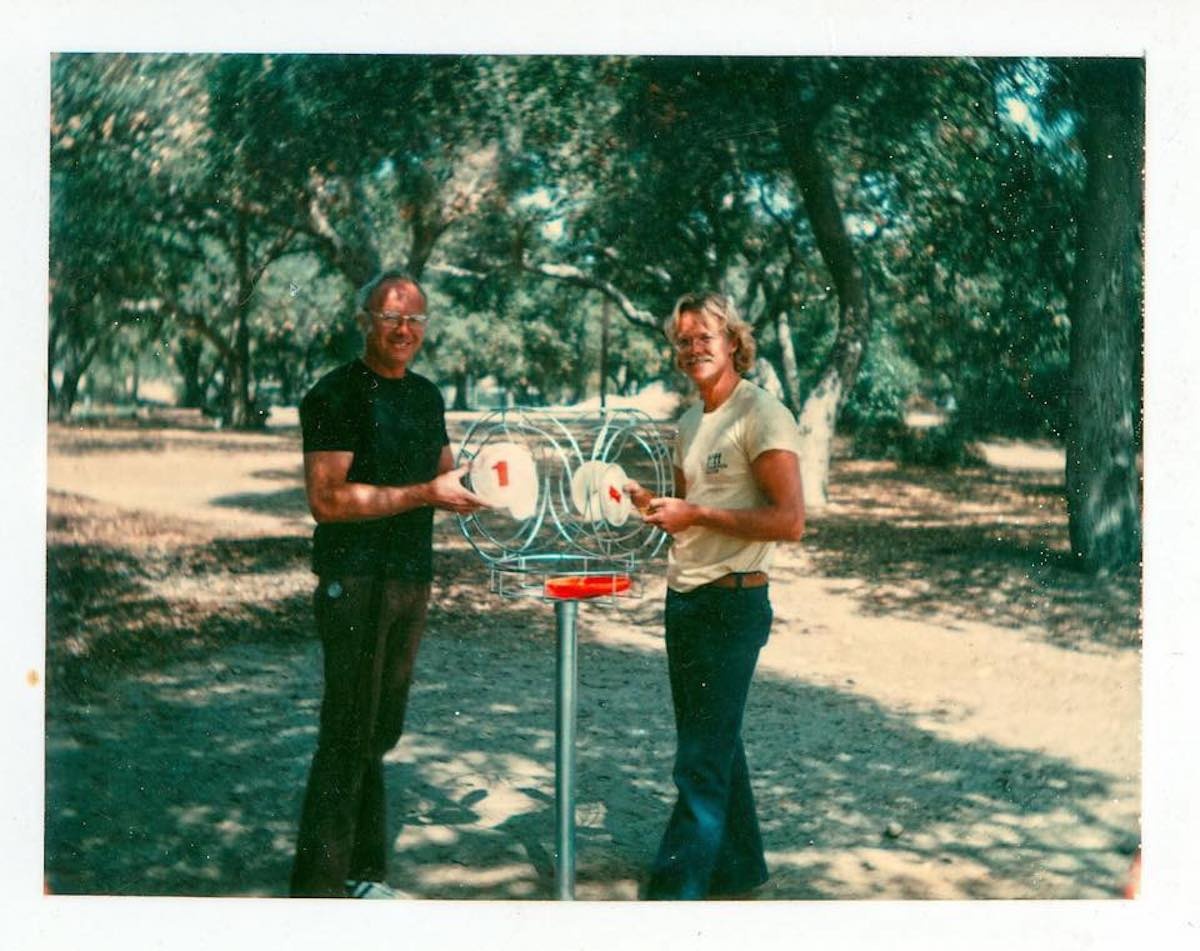
Still, to this day Roddick is a bit shocked that disc golf is what emerged as Ed's focus given that there was just one permanent disc golf course and fewer than 200 dedicated players in the world at the time he left Wham-O.
"It was a really gutsy decision that showed a tremendous amount of vision and risk-taking," Roddick said. "I'm sure the rest of the family must have said, 'Really? Really?'"
The second big development Oak Grove instigated was the creation of the disc golf basket.
The permanent course meant more people were playing disc golf regularly, and the pole targets quickly became problematic because they provided no lasting evidence of a hit.
"It was always controversial with just a pole," Gary recalled. "We'd say, 'I heard it!', you know? We were all having fun. It didn't matter at the time. But as the sport developed, the basket concept that became so well known really elevated the level of the sport quite a bit – just the reliability and the fairness."
Ed invented the basket with his son Ken (Gary's older brother) after he decided to turn his sights to disc golf after leaving Wham-O. The constant debates the poles created took the focus off fun and could leave players feeling bitter and cheated – not the typical emotional connections that make something popular. And though others had already created rudimentary targets that caught discs, they sat on the ground and were entered from the top. According to Roddick, Ed hated these solutions because they encouraged players to flop discs down into them, ruining the aesthetic beauty of disc flight.
"One of his design parameters was this has gotta be something that interrupts a, quote, 'normal flight,' and holds it," Roddick said.
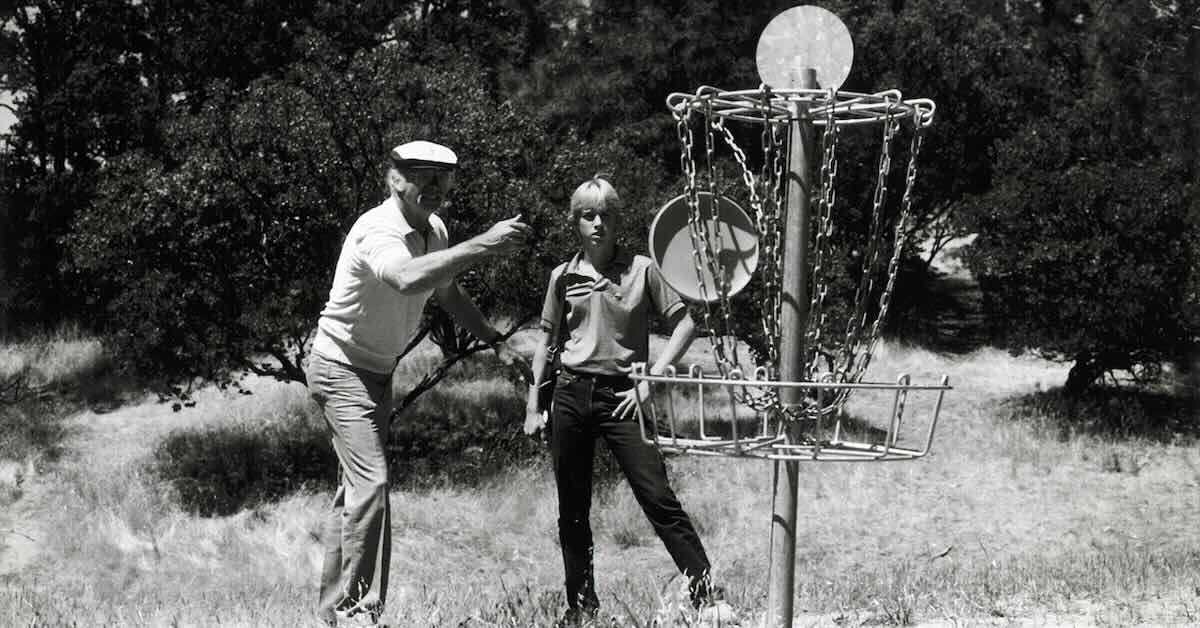
Roddick recounted that in late 1975 and early 1976, Ed and Ken all but disengaged with the world to literally hammer out a solution.
"Ed made the decision he was going to do it with disc golf, and then there was a period where we didn't hear anything about it or even see him much," Roddick said. "And he and Ken were basically locked in their garage banging, pounding, welding – trying to figure out how to do this."
Their first idea was the short-lived Friz-Hole-Pole, a cube-like construction with four openings on its sides where discs could enter. They installed one in Oak Grove in March 1976, but it didn't work out as they'd hoped.
Just a month later, however, they'd created and filed for a patent for the Disc Pole Hole (thanks in part to artistic renderings of the invention by Gary). The invention's circular basket, dangling chains, and mid-air mounting on a pole formed a shape that's still emblematic of disc golf today.
Soon after they'd created them, Ed and Ken's Disc Pole Holes became the targets for every hole at Oak Grove, and the game was changed forever.
"The basket was a gift from God," Roddick asserted. "Everybody adapted to it essentially immediately, and there were no arguments."
Oak Grove Disc Golf Course's Ongoing Legacy
After Ed and Ken's baskets made the game even more fun, use of Oak Grove's disc golf course ballooned to an estimated 5,000 people per week according to stats recorded by a local that Wham-O paid to stand at hole 1 and note player traffic.
Based on numbers like that, it didn't seem so crazy to go all-in on disc golf. That's exactly what Ed did, and Oak Grove's success was one of the tools he used to sell more courses outfitted with his baskets to other towns and cities through his and Ken's business, Disc Golf Association. Today, the company still sells baskets, discs, and more but is usually called simply DGA.
The course altered the trajectory of more lives than Ed's, though. It became a gateway for many people into the warm community surrounding disc sports, turning it into an important and enduring part of their lives.
One of those people is Tita Ugalde, a main organizer of the upcoming Oak Grove Golden Jubilee, a disc golf Major winner, and someone whose home course has always been Oak Grove. Her first round of disc golf was on the original pole-target setup.
"I went to go watch the [1975] world championships at the Rose Bowl and soon after it was announced that the Los Angeles Frisbee Club was going to get started, and we met at Oak Grove," Ugalde recounted. "The game we played was Frisbee golf."
Just sixteen at the time, Ugalde had been playing Frisbee with her brothers and sister for years, but she was still surprised to win her division at the meet-up in a sudden death playoff. The competitive thrill of the win helped excite her about the game, but the bigger factor was the sense of welcome she felt at the event. Players she'd seen and been enchanted by at the WFC like Roddick and women's overall champion Jo Cahow were there and happy to chat with her. She even ended up being a regular babysitter for Cahow.
To this day, the connection to others disc sports provide is a key reason Ugalde loves them.
"I guess what's kept me hooked for all of these years continues to be the magic of flight and that I get to watch the flights of discs with my friends," Ugalde said.
Ugalde knows that over the last five decades Oak Grove – which has undergone numerous layout changes, additions, extensions, etc. since its founding – has been just as important of a stepping stone and meeting place for thousands of others. It's one reason she volunteers on the board of the Oak Grove Disc Golf Club, a non-profit founded in recent years that has worked to beautify and rejuvenate disc golf's first permanent course with new tees, boxes of loaner discs, new benches, and more.
That work and her own connections with Oak Grove made her well-aware that the course's 50th anniversary was on the horizon.
"It was two years ago I thought 'It's coming up, it's coming up, it's coming up,'" Ugalde said. "This is significant. The world's first permanent disc golf course really needs to be celebrated."
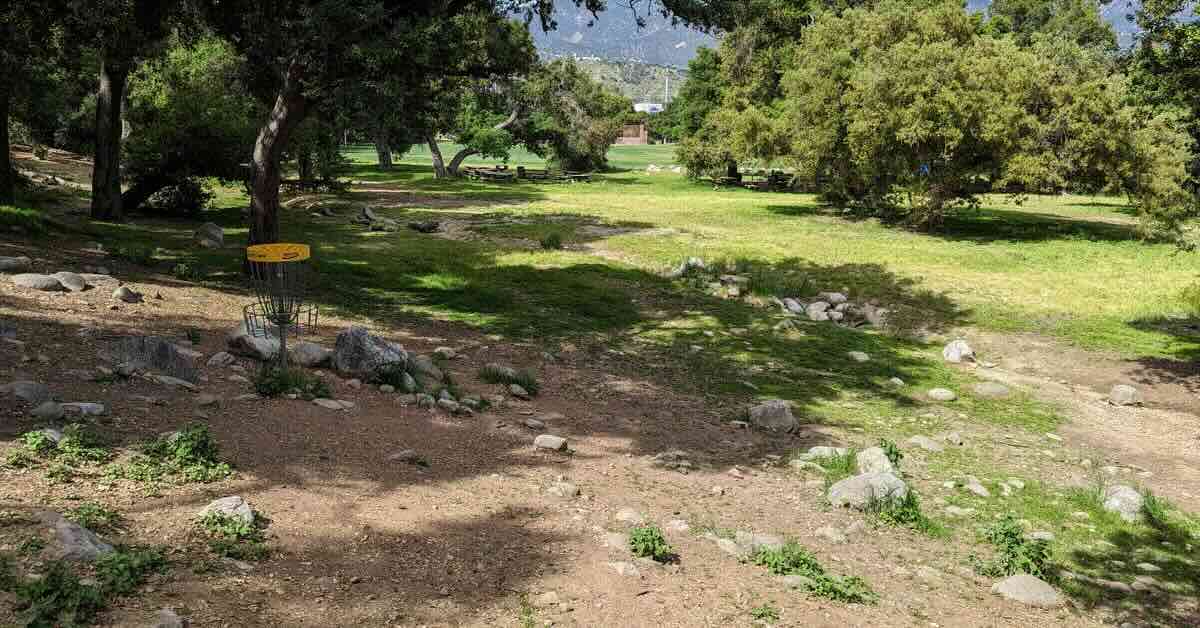
Spearheading the organization of the Oak Grove Golden Jubilee is the way Ugalde chose to realize that need, and it's turning into quite the affair.
"This is kind of the first West Coast reunion, if you will, of people who've been playing for a long time," Roddick said, noting his surprise at the number of old friends and competitors he's recognized on the guest list for a limited-seating event based around the history of the course scheduled for Friday, December 5, 2025.
The competitive highlight of the Jubilee will be a Throwback Tournament on December 6, 2025, where players can use only classic Frisbees and the targets will be – what else? – poles. World Disc Golf Hall of Famer Mark Horn is the tournament director. Horn founded the Wintertime Open – an annual Oak Grove event that's one of disc golf's longest-running tournaments – and directed it from 1979-2018 before passing the tournament into others' hands. Horn also ran one of the first disc golf pro shops at Oak Grove for years with the help of his wife Susie.
For Gary, who became an architectural renderer as well as a nuclear waste disposal watchdog, the Jubilee could be the first step on a journey to reconnecting with the sport his dad did so much to popularize. After losing touch with the Frisbee community in the late 1970s as its games developed more rules and regulations, Gary has lately considered dipping his toes back in, inspired in part by memories of the outpouring of gratitude he saw for his father's work when Ed passed over twenty years ago.
"Reading emails from people all over the world while he was passing on made me realize there's a very special community out there that I'm not part of anymore," Gary reflected. "That's what I think of: All those relationships. I think I admire and kind of envy the people who've stayed with it and kept the sport alive for so long."
The good news for Gary and anyone interested in trying or re-trying disc golf is that the Jubilee isn't a celebration of where something ended, but where it began – and where it still can go.
